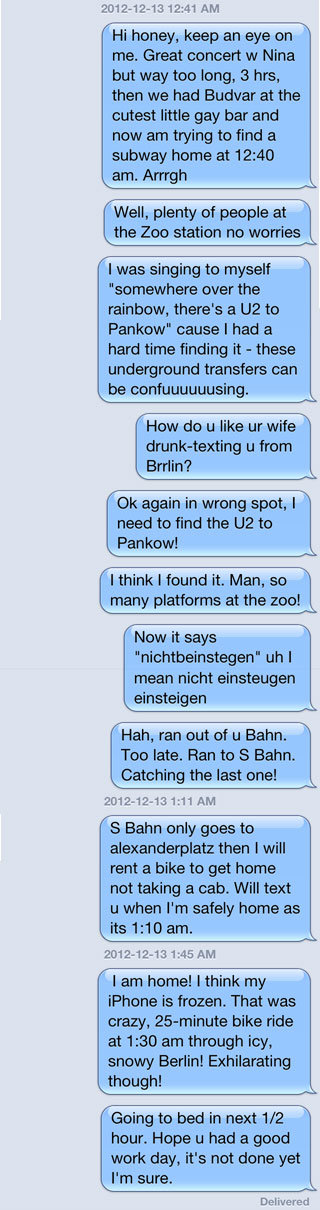
My day in text messages to my husband Jeff.
My day in text messages to my husband Jeff.

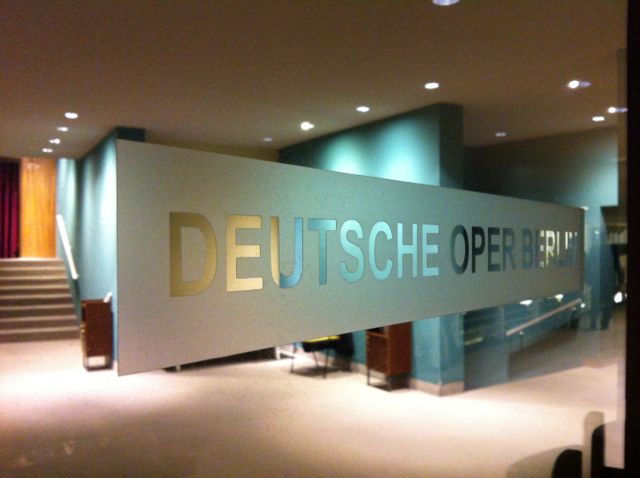
The Deutsche Oper Berlin logo. Click on it to get to the Deutsche Oper’s very cool website.
Nina, the behind glass artist, invited me over for dinner to her amazing Charlottenburg apartment on December 11. I am just realizing how lucky I am to have met a true artist and long-time Berlin resident here and not just the expat party crowd. Nina has a perspective of this city that is deep and wide, and she is willing to share that with me, which is a gift of insight that I would not otherwise have.
I did not even ask to take photos of her fin-de-siècle, art-filled place that she has lovingly and sacrificially restored over the years, with two ornate balconies facing two different courtyards, art-nouveau ceiling stucco and ornaments, turn-of-the-century kitchen stove, and hundreds of other details, out of respect for her privacy. She has put in the work, and she has managed to own that place by her own sweat and blood.
I had to eat and run, because I was due at the Deutsche Oper, where I’d booked a great seat to see La Traviata, which happens to be my favourite opera. When I saw it was playing in Berlin while I’m here, I just had to buy a ticket.
Speaking of the Berlin party-vortex, here is a link to a fascinating New York Times article on an Australian would-be band who came to Berlin to produce an album but ended up getting sucked into its expat party scene. And the ensuing discussion about party-artists vs. hard-working artists is interesting as well. Nina is definitely the latter. And how little do these partying kids know about someone like Nina? There is a huge difference between wanting to be an artist vs. actually being one.
As the German saying goes, “Von nix kommt nix.”

Deutsche Oper Berlin, a great piece of 1960s architecture. The inside is very much à la Mad Men.
Inside the Deutsche Oper Berlin.

Inside the Deutsche Oper Berlin.

Inside the Deutsche Oper Berlin.
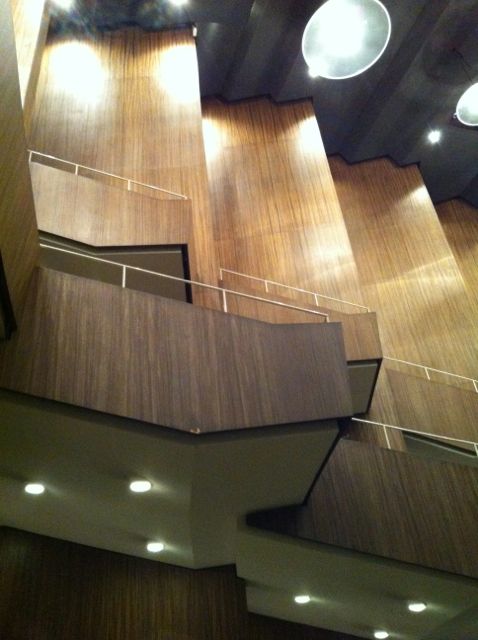
Inside the Deutsche Oper Berlin.
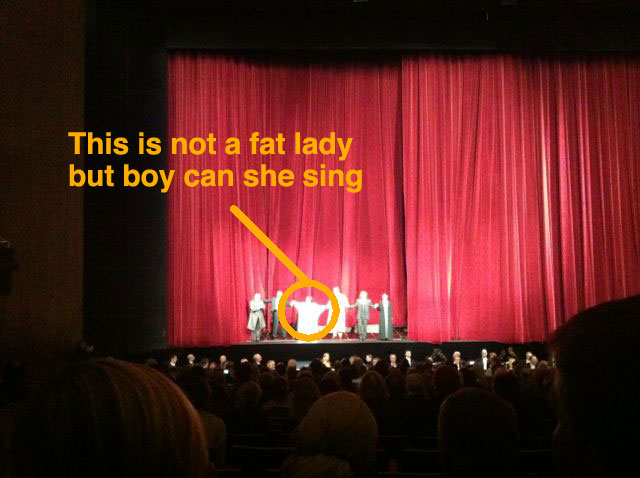
La Traviata ends to several ovations at the Deutsche Oper. The 3 main singers were all amazing: Leo Nucci (one of the best baritones in the world, as I am reading) was Giorgio Germont, Elena Mosuc was Violetta, und Ivan Magri played Alfredo Germont. The set design was black in black and rather flat-looking, it didn’t do anything for me, but thankfully the singing was amazing.

A bench in a Berlin U-Bahn station. It looks like it’s been there for 100 years, including the sign. I plan to post more on the Berlin U-Bahn typography later.
I decided during my first week in Berlin that Mondays will be a domestic day where I may work, do laundry, or chores, but I don’t try to go sightseeing or out on the town in Berlin. This is not a hard rule, but let’s call it a guideline for my health. I have been doing a lot of sightseeing, plus working, plus trying to fit in my sketching. I am not getting enough sleep, as usual.
Having said that about Monday being my day off, today I did find the energy to attend a life drawing session in a cultural centre around the corner from my Berlin apartment. It’s a 5-minute walk, and it’s a 2-hour session on Monday, Tuesday, and Wednesday evenings. I knew that would be a great option for a winter evening. So I dropped by there and did a few drawings. It was still a day of taking it easy.
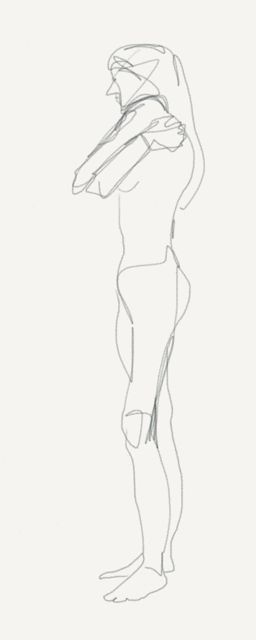
Life drawing session at Aktsalon Berlin
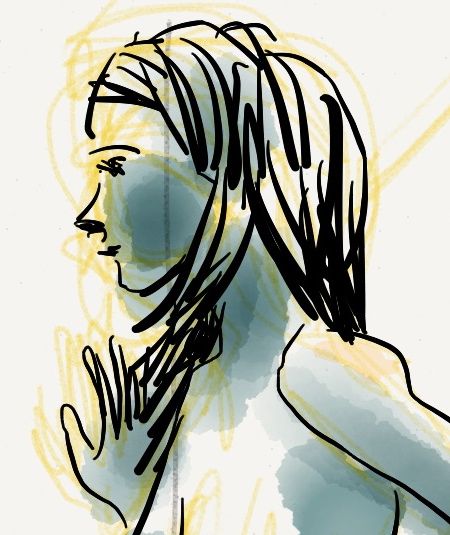
Life drawing session at Aktsalon Berlin, sketched on iPad with Paper app. The rest of her turned out OK, and I am not bashful about showing my nude drawings, but this woman looked too much like a child, so it just seems weird to show the whole figure.
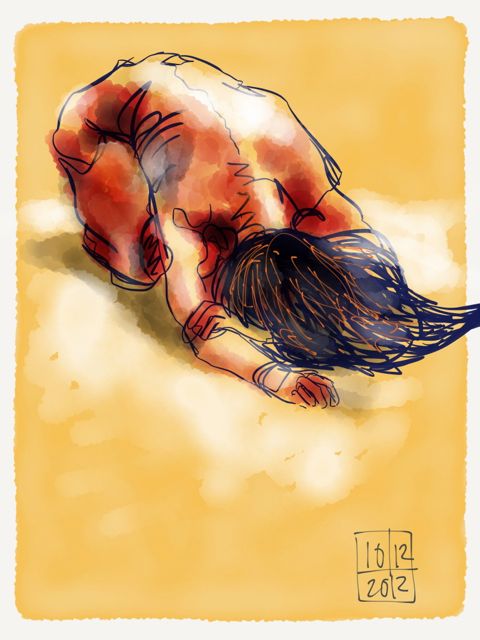
Life drawing session at Aktsalon Berlin, sketched on iPad with Paper app.

Life drawing session at Aktsalon Berlin, sketch made on iPad with Paper app. Drawing on an iPad is still a bit like eating a chocolate bar with knife and fork while wearing mittens. I am only showing her face because the rest of her body didn’t turn out as well.

I met the photographer, Paul Green, who created this book, Berlin Burlesque, consisting of beautiful photos of dancers from the Berlin burlesque scene. I am going to meet him again this week to buy one of these books from him.
Today was the first time I got a glimpse of the Berlin party scene, and I don’t mean politics. I felt the magnetic pull of wanting to party and got an inkling of how friendly and fun this city is, and how easy it would be to end up on an all-night bender through the vast number of pubs and clubs. This city is teeming with international hipsters and artists and creative professionals.
I went to Dr. Sketchy Berlin on this snowy Sunday, December 9. Dr Sketchy is an international anti-art-school life drawing event held in many cities around the world (I have been going to draw at Dr. Sketchy Vancouver for the last two years). You pay around $10 to get in. For that you get one or two models in creative costumes, often from the burlesque scene, who pose for you to draw them for three hours. There’s music and you can buy food and drink and chat with other people while you draw. The models get to dole out small prizes for drawings they like. Many illustrators and computer animation artists come here to practise their skills, as well as urban sketchers like me. I find there’s not much overlap with the art school life drawing crowd, because when I mention Dr. Sketchy in art school drawing sessions, people look at me blankly. Most have not heard of it.

One of the models, Minou Moustache at this Dr. Sketchy Berlin session joined us afterwards for a beer, still in his Mexican makeup. Really nice guy, and a first-time model. I just have to post this here to show that I am hanging out with young male models in Berlin now, and it’s only taken me three weeks ;-). I asked permission to take his photo, but taking photos of people is less acceptable here than in Vancouver.
The venue for Dr. Sketchy Berlin is the White Trash Fast Food Restaurant, a typical Berlin venue in that it is multi-purpose: it’s a restaurant, a bar, a DJ lounge, and a tattoo parlour. In Vancouver, there are strict rules outlining what is a restaurant vs. a bar vs. a night club, and in which zoning of the city they are allowed to operate. Never even mind the tattoo parlour. The food I tried at the White Trash Fast Food was not very good, so I will make a sweeping generalization and say that in Berlin, the food is secondary to the experience of the vibe. In Vancouver, it may well be the opposite, since we are a bit of a foodie city. In Berlin, I get the impression that the food does not matter as much.
But there is a certain laissez-faire, a why-not? attitude, more open-ended options to run an evening establishment here in Berlin that we could use more of in Vancouver. Berlin has a loose, improvised feel, yet at the same time it’s all put together with a lot of thought and works extremely well.

A sketch I did of the model Minou Moustache. I did all the drawings on this page on the iPad, with the Paper app.
After the 3-hour drawing session, during which I already met a couple of nice people who were sitting next to me, a Berlin illustrator, and a Vancouver(!) animator, I ran into Omar Jaramillo, one of the urban sketchers I had met at the Urban Sketchers Symposium in Lisbon last year. We will try to get together for a coffee sometime while I’m here. He’s a friendly guy, originally from somewhere in South America, and seems to know everyone.

Two of the models at Dr. Sketchy Berlin.
Then I was on my way home, already had my coat on, when I got invited to join a group of sketchers for beers. We grabbed a table, a couple of the models we had just drawn joined us, we ordered food and drink, talked, showed each other our sketchbooks, I got advice on what to do in Berlin, people came and went at the table, and by the time I was back out on the street walking home, it was 8:30 pm. I had been in that bar since 2 pm, for 6 1/2 hours, having a fun time with a bunch of people from all over the world that I had never met before: A Colombian architect, Felipe; a Mexican comic book artist, Tony; the model Minou Mustache; the photographer Paul Green from Australia; and Lala Vox from Mississippi (her burlesque stage name). She was the MC and is also an illustrator and a burlesque artist. She moved to Berlin in 1995 for love, and is still with her man, the German DJ U.F.O Hawaii, who spun fun and chilled tunes during our drawing session. Dr. Sketchy Berlin even has its own theme music, see the YouTube video at the top of this page.

The burlesque model Golden Treasure at Dr. Sketchy Berlin, posing as Frida Kahlo.
I am beginning to understand how the Berlin party-vortex can suck you in. Everything is open all night. There is always another bar around the corner. People move from table to table and bar to bar and socialize. Random amorphous groups form, lose a few people here, pick up another person there. There seems to be no cliquish-ness, no establishment. Everyone is from somewhere else, everyone is creative and has the potential to inspire someone else.
I am romanticizing, of course. But not completely.
All I know is that I now want to go clubbing in Berlin at least once. As Berlin would say “why not?”
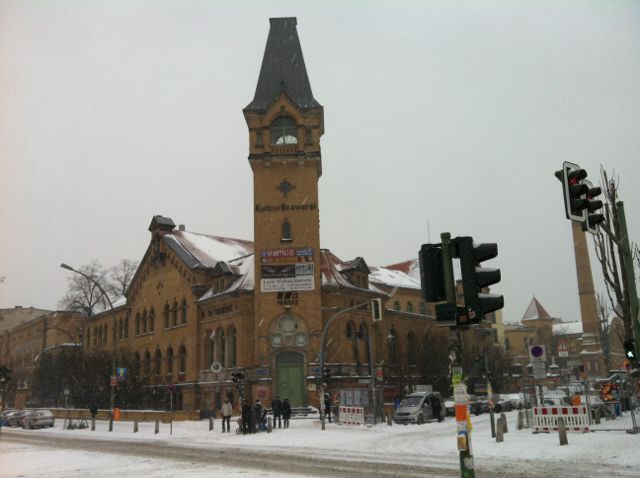
The outside of the KulturBrauerei, Berlin, a former brewery converted into shops and venues. Its central courtyard houses the Lucia Christmas Market.

Walking through the Lucia Christmas Market on the way to Dr. Sketchy Berlin in drifting snow.
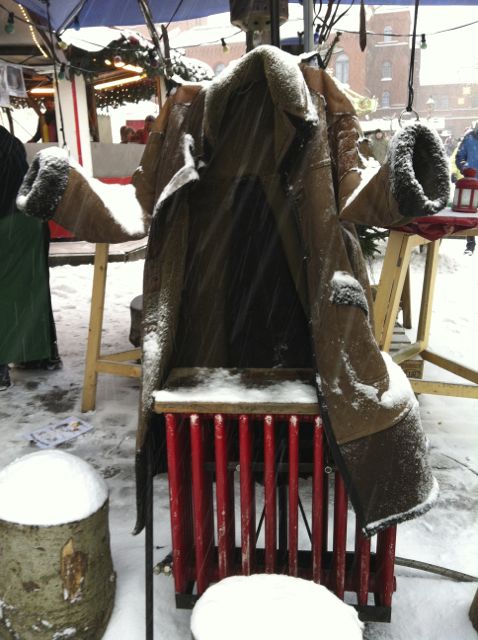
These are hilarious: Warming coats at the Lucia Christmas Market. There are several of these giant coats. You can sit in one of several seats and stick your arms into the sleeves of these giant coats to warm up. Of course, that looks ridiculous = instant fun.
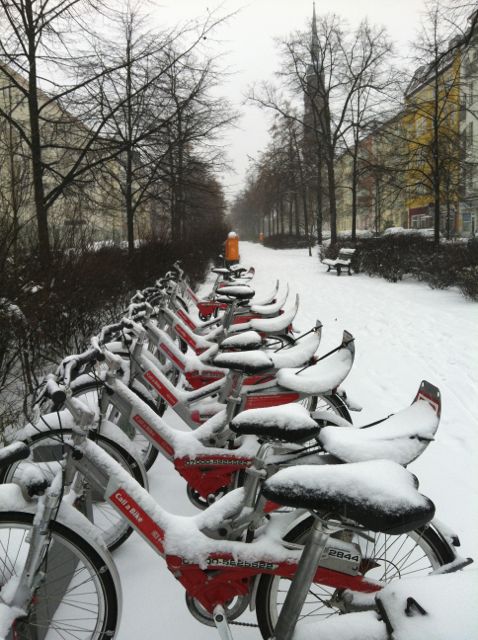
I walked down Schönhauser Allee to Dr. Sketchy. The central path in the middle of this large boulevard was covered in snow, and so were the Berlin City Bikes. I did not rent one today, but I enjoyed my walk in the snow on a quiet Sunday afternoon at 1:30 pm, when Berliners are still coming home from their Saturday night parties. I am not sure when they sleep here.
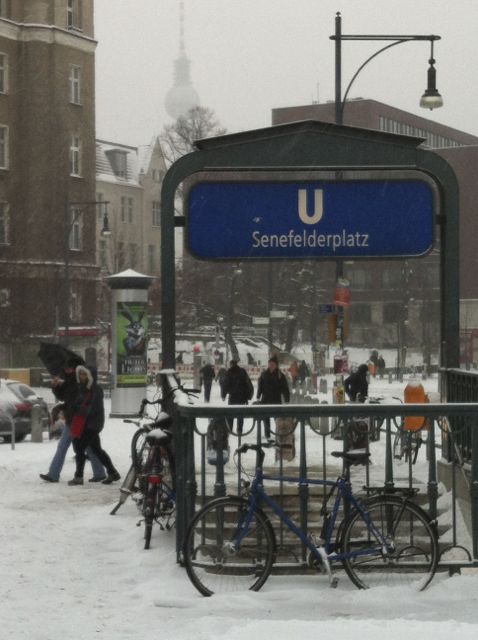
Just wanted to record the typical entry to a Berlin U-Bahn station. With the TV Tower in the background. In Vancouver we have the North Shore mountains, in Berlin they have the TV Tower.

Platoon Kunsthalle Berlin — a venue for art built from shipping containers. Read the website. They also have DJ parties on the weekends. No cover charge. Berlin just likes to party, and it wants you to join in.
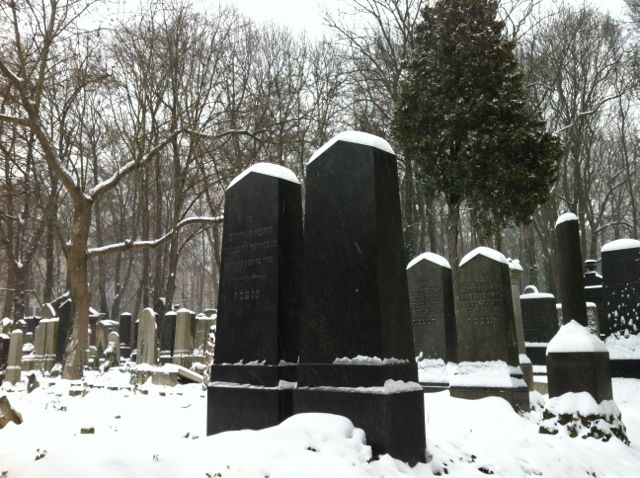
A Jewish cemetery is located on Schönhauser Allee. I have been meaning to go there, but it is closed on Sundays, so I took a photo through the iron bars of the locked gate for now.

A Berlin courtyard. Nothing special about this courtyard, but it’s just typical for Berlin that you will see evidence of art and creativity everywhere, such as this graffiti. I just think that is so cool.

Waiting for the Dr. Sketchy session to start at the White Trash Fast Food Restaurant, an eclectic, multi-level place which used to be a Chinese restaurant.

Dr. Sketchy Berlin stage setup for today’s session themed “Mexican Session”.

My handstamp for this Dr. Sketchy session says “Mahlzeit” meaning “bon appetit”.

Even the snow men (or is it a woman?) look creative in Berlin and wear a jaunty artist’s beret.
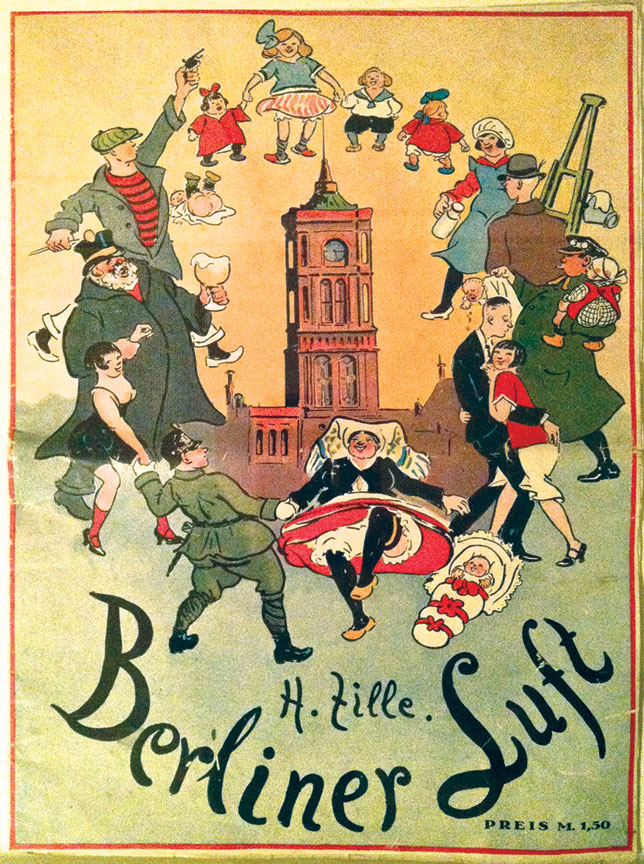
Poster “Berliner Luft” by Heinrich Zille. There is an old saying about how special the air is in Berlin, but I think it’s more about the energizing qualities of this city than the air.
I like living in Canada, but I must admit that it feels too Britain-oriented to me at times. Given Canada’s history, that makes sense of course. However, like many Canadians, I am not of English background, so the focus on what’s coming from England sometimes means we miss out on what is going on elsewhere in the world — for example, in Germany.
Here in Berlin, I am discovering how friendly a city can be and what a great culture it has to offer, and what lessons might be learned from a city like Berlin. Vancouver, for example, is considered by many people to be quite unfriendly, especially when you’re new. That is definitely not the case in Berlin. I find that people seem “real” here, meaning they don’t mind talking to strangers, they don’t put on airs, they are being themselves and don’t seem to feel they will lose their soul if they speak a few words with someone they’ve never met.
It is considered uncool to be a relentless self-promoter, to be chasing after money, to flaunt wealth, or to overcharge for anything. Throughout Berlin, I find prices for events and museums to be quite reasonable. They also always offer reduced rates to people who are seniors, students, unemployed, or in the military or doing volunteer service. Maybe socialist principles (and I believe small-s socialism is a good thing) have grown stronger roots here than in many other places, given Berlin’s history.
While this is a major centre of art, culture and history, it does not have much commerce. This means Berlin is still relatively inexpensive to live in, although that is changing rapidly. Unfortunately, it also sounds as though lucrative jobs are not common here, which is already a problem in combination with the rising real estate and rent prices.
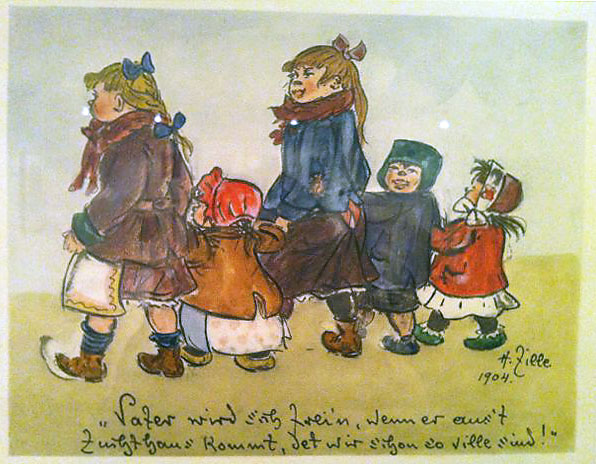
A cartoon by Heinrich Zille. This cartoon’s punchline is: “Vater wird sich frei’n, wenn er aus’t Zuchthaus kommt, det wir schon so ville sind!” (Dad will be thrilled when he gets out of jail and sees how many we are already!)
On Saturday, November 8 it was time to visit another one of my heroes: Heinrich Zille. The Zille Museum is a small museum in Berlin’s Nikolaiviertal (= Nikolai Quarter, centred around the Nikolai Church). Zille was pretty much the original Berlin urban sketcher, capturing with his drawings the life of the poor people of Berlin in the late 19th Century, with their heavy workload and long days in factories, their street smarts, and their sometimes hard-scrabble life. And the street urchins. He constantly recorded his surroundings and wrote down funny snippets he overheard. I had books of his cartoons as a child and teenager and always loved his work.
After the museum visit, I had time to visit the Weihnachtsmarkt on Alexanderplatz. I looked at the knick knacks (wooden Christmas pyramids, knitted or felted hats, socks, mittens, Christmas ornaments, jewellery, purses, leather goods). I sampled a variety of foods: Glühwein, roasted chestnuts, dried fruit bread, and what seems to be a Berlin pastry called Quarkbällchen — a small round deep-fried piece of dough which seems to have no sugar at all except for the icing sugar that is sprinkled on top. I like it, because it’s small and not very sweet at all. The dried fruit bread was amazing, large chunks of natural-tasting dried fruits and nuts like pear, apple, plums, hazelnuts. Again, that felt healthy. So the only unhealthy item was probably the Glühwein — but that was necessary, because it warmed me up, and because, well, having Glühwein is simply part of the Christmas market experience, unless you’re a teetotaller.
After the Christmas market degustation, I went to a play about Heinrich Zille nearby. It wasn’t really so much a play as it was an interpretation of Zille’s Berlin through songs and skits performed by two actors accompanied by a piano player. The actors, a man and a woman, had outsized personalities to match their physical size, the theatre was a tiny basement room holding about 50 people (I am used to these low-budget venues from Vancouver), and the whole thing was heartfelt, and full of that Berlin vim and vigour.
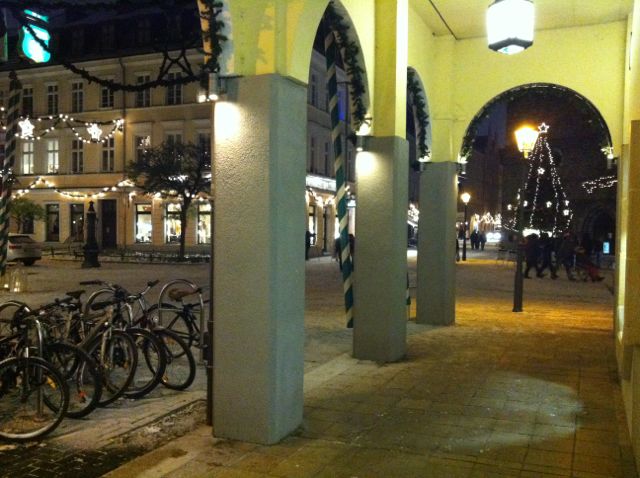
The Nikolaiviertel, where the Zille Museum and the play are located, is the most medieval area of crooked narrow cobble-stone streets that I have yet seen in Berlin. Most avenues are wide and straight here.

A random poster print from 1961 hung in the theatre lobby, about a 10,000 Deutschmark reward for help in identifying an East German refugee who was shot dead by the East German border police. I often run into these sombre reminders of what life was like in East Berlin 25 years ago.

A cute writeup on the sandwich board talks about the passion of the 3 actors who are creating an impressionistic portrait of the illustrator Zille’s Berlin, with not just soul, but also song and dance and their blood, sweat, and tears. And they promise that you will cry, but now you need to rush and buy tickets.
Unser Theater is jut,
Hier fließt Herzblut!
3 Künstler jeben nich nur Seele —
ooch Töne aus Klavier und Kehle!
Da bleibt keen Oje trocken.
Los — macht Euch uff de Socken!
Karten koofen.

Traditional lace from the former East German area of Plauen. This shop has apparently survived the socialist regime, and it looks a bit “Ossi” to me, I must say. The lace is pretty impressive, but not my taste at all.
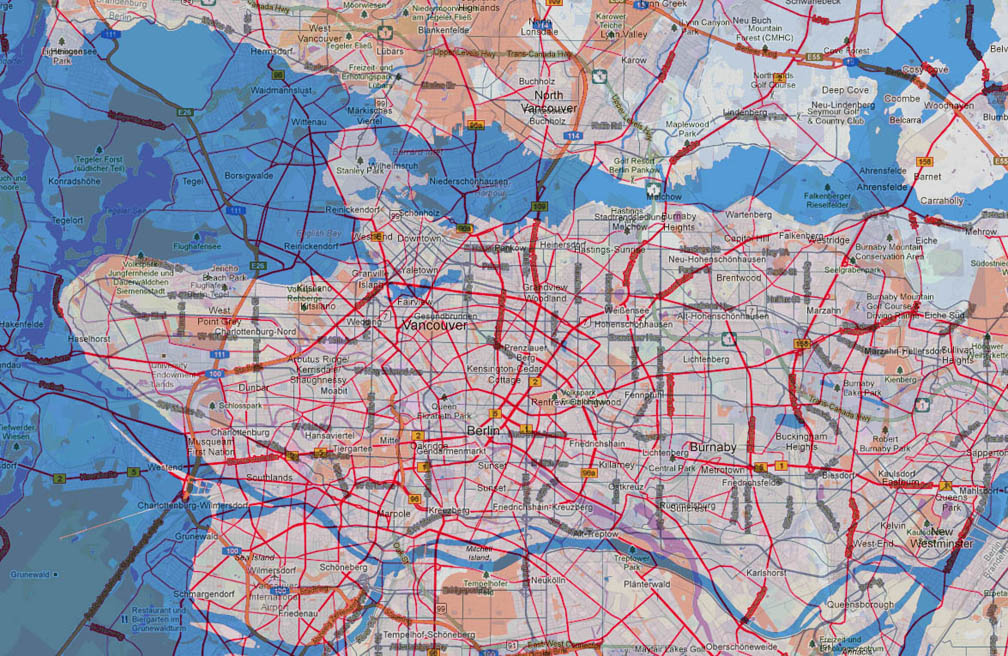
This map is a sandwich of Vancouver and Berlin. I created two Google maps at the same scale and stuck them on top of each other, with my homes in Vancouver and Berlin in the same spot on the map. The red veins are Berlin’s roads. This helps me compare the distances in Berlin to the ones I am familiar with in Vancouver. Since Berlin has a higher urban density, I think, it is not really bigger in area, even though it has 3.5 million/4.5 million in the metro area vs 600,000 people in the City of Vancouver/2.2 miilion in the metro Vancouver area.
It’s getting difficult for me to remember what I did even two days ago. Hence, this blog. One day, when I’m back from Berlin, asking myself “what the hell did I do during those three months?” I will be able to look it up on this blog. It will also help me remember some life lessons that I am drawing from my experiences here. It’s not all about the sightseeing — that is just the external stuff.
I am spending a lot of time here in an internal dialogue that is at times so loud I cannot hear much else. This is beyond good or bad, but simply as it should be. This is my time to focus on my inner journey. I am very grateful to have this opportunity. And “Ich fühle mich hier sauwohl” (I feel bloody great here), as Heinz Rühmann’s character says in the German classic movie Die Feuerzangenbowle, where he returns to high school as an adult man to make up for things he missed out on.
There are so many impressions here that I am easily able to relate to my inner life, which is very enriching. I am trying to keep a separate journal to record some of those, but this blog takes a lot of time.
On December 7, I rented a bike and cycled halfway around Berlin’s ring streets to the large Turkish market at the banks of the Maybach in Kreuzberg. I am amazed that I am still cycling in this freezing weather, it was -4˚C and the roads felt a bit frozen. All I bought at the market was half a kilo of mushrooms for 50¢ (they ended up in a casserole dish that I will be eating for dinner four days in a row).
Then I went to the Käthe Kollwitz Museum. Käthe Kollwitz is one of my favourite artists, I was inspired by her work and dedication to her political beliefs ever since I was a teenager. She knew what she needed to say and she had the talent and will to say it with her art. “Eine Gabe ist eine Aufgabe” was her motto (It works better in German, but it means: A talent is an obligation). The museum is in a beautiful old villa in Charlottenburg and had a special exhibit about the influence of the Russian October revolution on her life and work.
Right next door to the Kollwitz Museum is the Literaturhaus Berlin which is also in an old villa where as guests of a wealthy couple, artists and scientists would visit at the turn of the 19th century. Tours of this villa are held on occasion and I may sign up for one at some point.
After the Kollwitz Museum, I had a coffee and cake at Einstein Kaffee before going to an opening of a show at Galerie Taube, where one of the Urban Sketchers, Oona Leganovic, a 25-year old German woman, had a couple of her drawings included in the multi-artist show. All the work represented by Galerie Taube is highly figurative, which is not so much my thing, even though I draw and paint figuratively. But I very much like Oona’s purposely unfinished-looking watercolours, which leave something for the viewer to conplete, and I am planning to buy one of her sketches as a souvenir.
I am doing my best to express my support for these Berlin artists I am meeting by buying small works off them (this is the watercolour I will be buying from Oona), and the pieces I am buying are going to be very meaningful to me. They will remind me of this time in my life when I got to meet these artists in person and grew in understanding of their work, and of what it means to be an artist.

It’s hard to cycle by these amazing sights in Berlin. Luckily, I don’t have to go by. I can stop and take a picture, and I do. This church is just sitting there in between regular residential buildings, along the big ring of grand streets that surrounds Berlin.
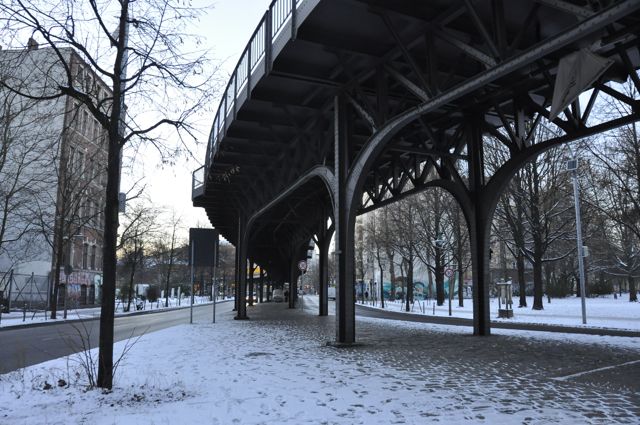
The raised Berlin metro near Oberbaumbrücke.
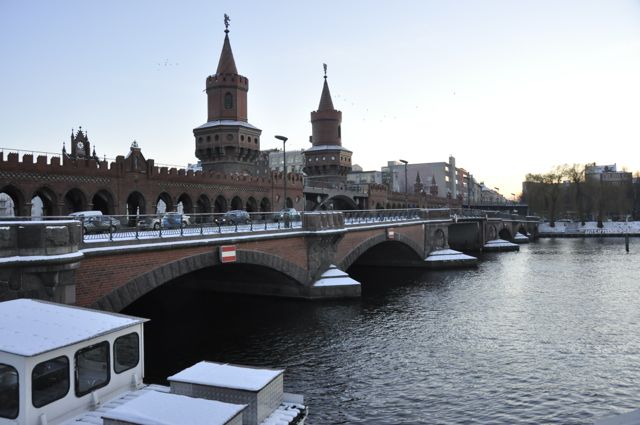
Oberbaumbrücke Berlin. It crosses the River Spree and according to Wikipedia, was featured prominently in the movie Run Lola Run. I will have to re-watch that one now. Also, Oona Leganovic, the artist I was going to meet later that night at her gallery opening, has spent a lot of time drawing and painting this bridge.
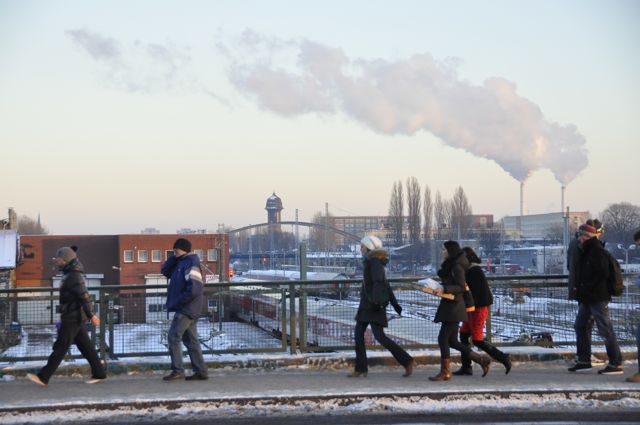
Assorted people crossing the Oberbaumbrücke.
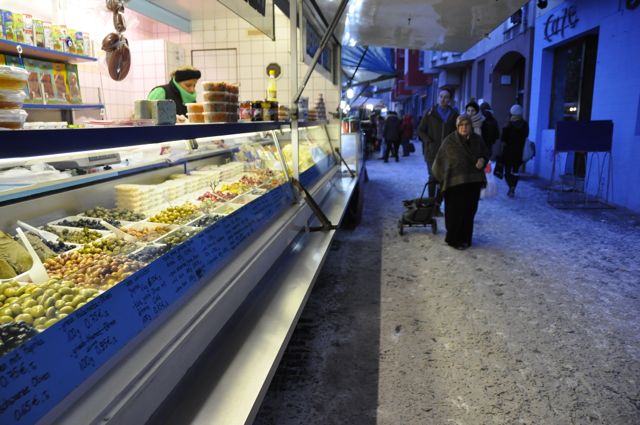
At the Turkish market at Maybachufer, Kreuzberg, Berlin. Definitely worthwhile visiting. Beautiful setting at the banks of a somewhat smaller but still substantial river which may be a tributary or channel connecting to the Spree River.
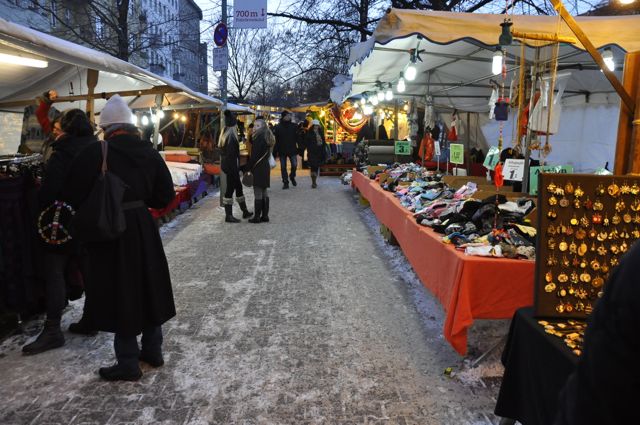
At the Turkish market at Maybachufer, Kreuzberg, Berlin.
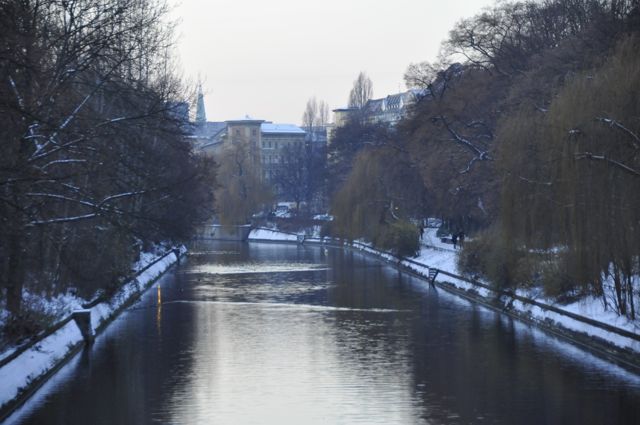
Banks of the Maybach, Kreuzberg, Berlin.

At the Turkish market at Maybachufer, Kreuzberg, Berlin. Of course you can get everything here, not just food, but shoes, clothing, bedding, hardware, you name it.
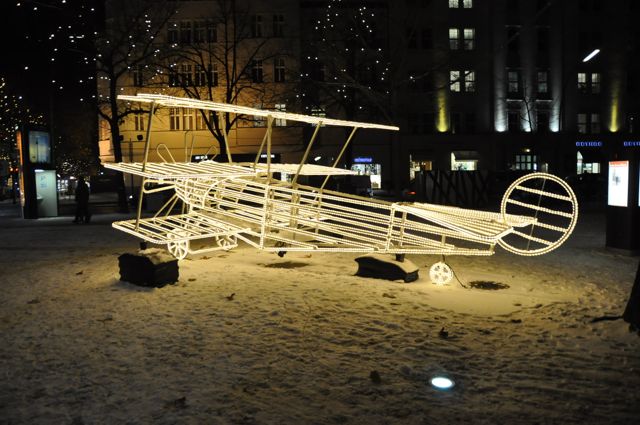
Berlin Christmas lights and decor on Kurfürstendamm.
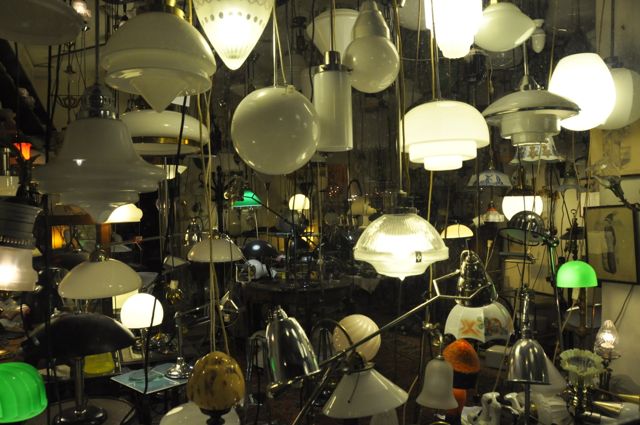
A cool retro lamp shop near Kurfürstendamm, Berlin.

I am having a great time watching old German movies on YouTube. This is the title from Die Feuerzangenbowle, a 1944 movie with the famous German actor Heinz Rühmann, who sounds like he was a Berliner. As I mentioned above, the plot is about a successful writer who decides to go back to high school to make up for the camaraderie he never had, having been home-schooled. And a Feuerzangenbowle, which means “fire tongs punch” is a special kind of punch where you set fire to a large sugar cone that has been soaked with rum and let it melt into a spiced red wine concoction.

A poster showing the actor Heinz Rühmann who starred in Die Feuerzangenbowle.

I am enjoying a nostalgic German moment, watching old cartoons by Loriot, a German cartoonist and comedian, who died in 2011. If you are interested, watch this 3-minute video of one of his best skits ever, where a proposal of love is overshadowed by a stray noodle. This video even has English subtitles. When I saw this skit for the first time, I screamed with laughter.

The hamam for women in Berlin
A hamam is a traditional Turkish bath. The one I have been planning to visit in Berlin is women-only and has been around since 1988. I made it there on December 6. It costs €14 for a 3-hour visit and it is self-serve unless you book a treatment as described below.
This hamam is a low-key casual place where women (and as I found out, on Thursdays they can bring children as well) can come to wash, sweat, relax and socialize. There are several resting rooms with large sofas, loungers and lots of pillows, a bar where you can buy food, juice, water or tea, and an inner courtyard where you can rest in the fresh air, or briefly cool off in the winter. I felt very comfortable here and decided I have to come back as often as possible while I’m in Berlin. I booked a treatment for €24 for next week (kese and sabunlama) to get an idea of how to do these myself in the future.
I have been to a hamam in Vancouver, the Miraj Hammam, a wonderful place, but you have to book a minimum treatment which ends up costing about $120. The self-serve European sauna or spa, where you are not required to book a treatment, but can use the sauna/steam/pool/hamam facilities for about 3 hours for around $20, simply does not exist in Canada.
From the Berlin hamam’s website:

This is a pestemal which is used as a coverup and towel in the hamam. I bought one for €10 for future use and as a unique souvenir.
Hamam culture arose over the millennia as a blend of Arabic and Mediterranean traditions. The word hammam means “to warm” in Arabic. Turkish bathing culture, which dates back to around 800 years, is an extension of the public baths once celebrated in ancient Greece and later expanded throughout the Roman Empire. The influence of Islam emphasized the social relevance of the hamam as a center of communication.
There is a certain order in which you typically do things in a hamam:
1. You start by washing yourself in a warm central room. There are sinks with hot and cold water around the perimeter of the room. Using a shallow engraved metal bowl called tas, you pour water over yourself.
2. Once warmed up, you then use a satin glove called kese to massage and peel your skin.
3. Then you wash yourself with soap called sabun, the soap massage itself is called sabunlama. Steps 2 and 3 can also be booked as a treatment.
4. You rest in the centre of the room, on the gobek tasi, a large heated stone area.
5. After this, you might do a sauna cycle or two, or rest in the lounge areas, outside, or book a massage or cosmetic treatment.
The end effect is that you feel extremely relaxed and content, as if you are glowing warmly from the inside, and also ready to fall into bed and sleep. Just remember to drink lots of water during and after the hamam visit to rehydrate.

The entrance to the hamam is up the stairs on the right. It is part of a women’s centre with various facilities, such as educational, consulting and fitness offerings. It’s also in a former chocolate factory, Schokofabrik, which is the perfect location for a women’s centre.

The Schokofabrik women’s centre is a great idea, but they are running out of funding and have started a campaign to find a “1,000 Aunties” to support them with a monthly donation.
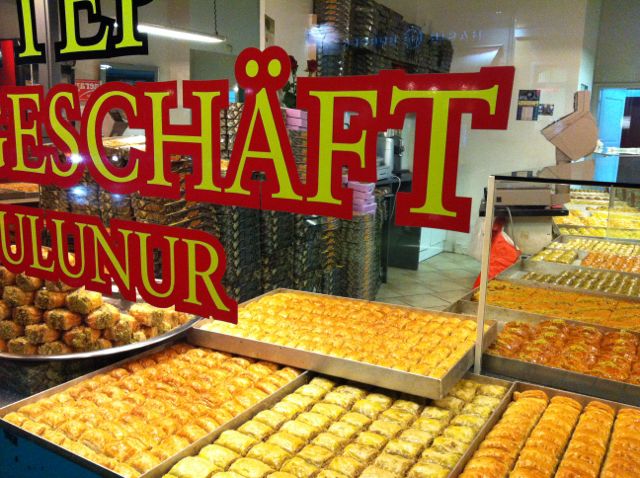
Turkish sweets. The hamam is located in the Kreuzberg district of Berlin, which has a large Turkish community and culture. I very much enjoyed walking around here and plan to come back and sample Turkish food, which is something we don’t really get in Vancouver.

Pan-Asian restaurant wall decor, Kreuzberg, Berlin. This was another restaurant I saw, and I just had to photograph the cool photographic art on the wall. In Vancouver, in a hole-in-the-wall place like this, you would not see this kind of sophisticated art. And if you did, people would complain about the nudity. It’s a shame, I think. How wonderful to see this kind of freedom here, to display something so beautiful and moving as an artistic portrayal of the human body.

Germans like their herbal digestives. I was amazed by the variety of herbal liquors you can buy at the grocery store (besides any other kind of alcohol, of course).

My friend B. gave me this tiny moose Christmas pyramid, which is now adorning my window sill here in Berlin.
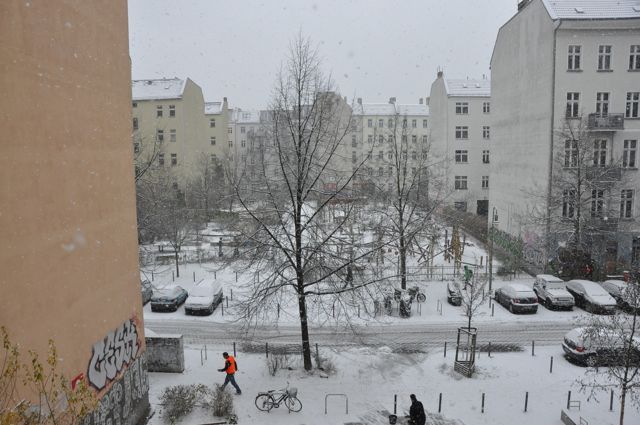
We now have snow and ice in Berlin. It’s pretty cold here for a Vancouverite like me: -4˚C high / -7˚C low.

I have a huge sweet tooth, it’s more of a tusk really. I bought my old faves, Prinzenrolle cookies, Milka chocolate, and Haribo gummies. You’d think this would last me a while, but it probably won’t. And don’t be fooled by the tomatoes in the background, I probably won’t even get to eating those.
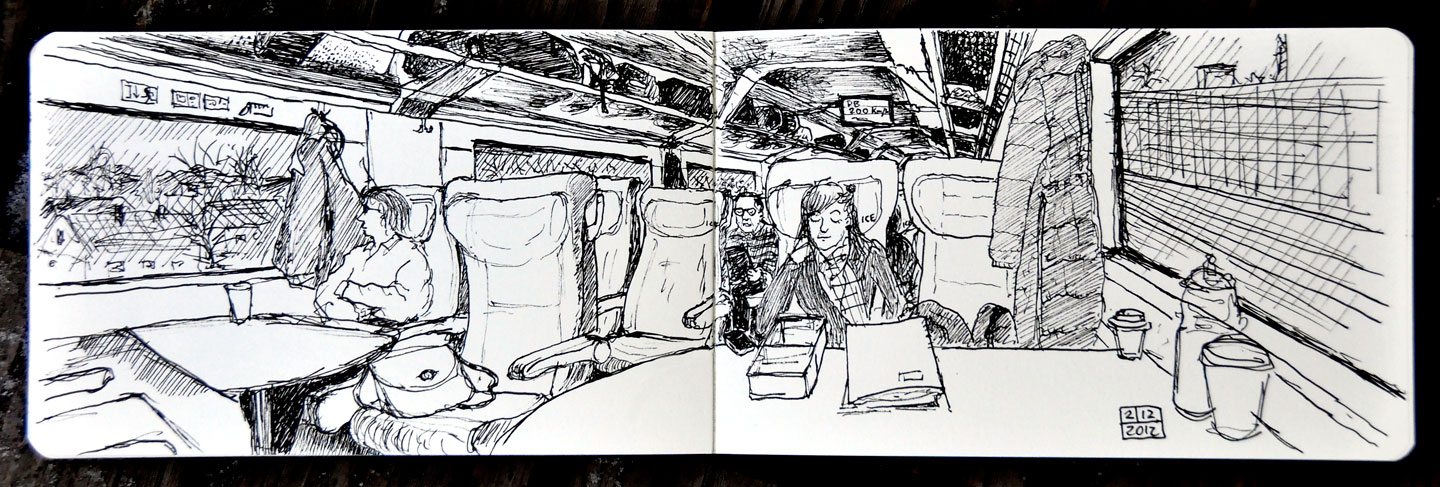
I had plenty of time to sketch during my 4 hour ride on the ICE Berlin-Cologne.
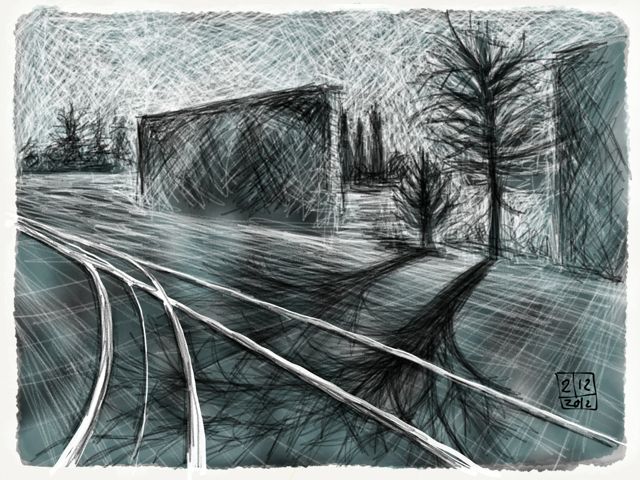
Sketched on the iPad with the Paper app, trying to capture not so much what I saw out of the window at 220 km/h, but an impression of a drifting landscape. The speed of the world moving outside is also a great metaphor for time passing, which it does for everyone, faster and faster, as you grow older.
I had promised my old best friend from grade 5 who lives outside the Cologne area, a separate 3-day visit before my stay with relatives at Christmas, which will make it a bit more difficult to see her. I left Berlin on Sunday, December 2 and returned on Wednesday, December 5. I had booked my 4-hour ICE Berlin-Cologne return trip when I was still back home in Vancouver. I also reserved my seat for peace of mind.
Train travel in Europe is always romantic to me, possibly because I get to travel that way so infrequently. I am sure the regular commuters look at it from a more practical angle. But even in B.C., I love riding the ferry to Vancouver Island, every time. Aren’t all of us artists hopeless romantics? If we did not believe in the intangible, we would never make art. Or, as I like to say, “Function is overrated.”
So I was thrilled to be on the ICE Berlin-Cologne for four hours, even though I had to get up at 5 a.m. and catch a U-Bahn to the Berlin Hauptbahnhof (main train station) at 6 a.m.
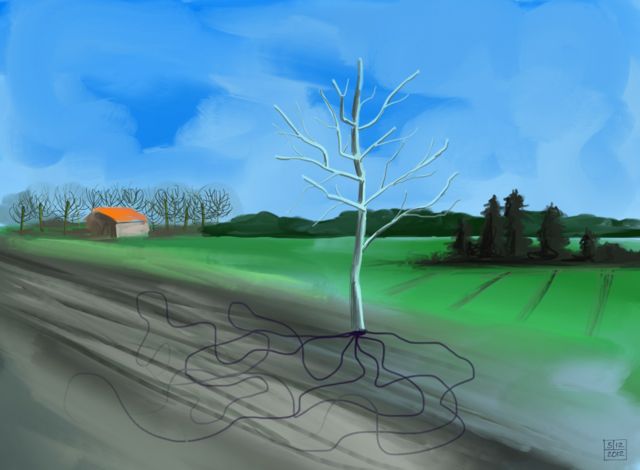
Painted on iPad with ProCreate app. This was done on the return trip Cologne-Berlin, in the on-board restaurant where I had a sausage + bun meal and a coffee. I have great memories of a wonderful breakfast in the on-board restaurant of a train through the Austrian Alps with Jeff: fresh buns with butter and jam, a great cup of coffee, your favourite person across from you, while that amazing world out there zips by.
At that early hour on a Sunday morning, I have never seen so many bedraggled, unsteady-on-their-feet 20-year-olds on the subway platforms. I just had to smile when I saw all those kids so worn out from a night of partying in Berlin, swaying slightly to and fro as they tried to hit the right buttons on their smartphones to text woozy post-mortems of the night to their friends.
I questioned myself whether I felt wistful that I am past the age of all-night clubbing, even though it’s something I only rarely did, and would not even be interested in doing now. But I have to admit I would like to feel that I have the option to do it. While I know that I have the energy to party all night, I don’t think my age group would be welcomed enthusiastically. As my cousin told me, a friend of his who tried to go clubbing overheard “Are they coming here to die now?”
I was not in much better shape than those 20-year-olds though, for an entirely different reason; I had been up working again until almost 2 a.m. to tie up some loose ends my clients asked for when they got to work back home in Vancouver, and I had a hard time falling asleep, so I barely racked up two hours of sleep myself. Oh yeah, I also like to say “Sleep is overrated.”
I had a meaningful, but also somewhat sad time with my friends and relatives. There are some age-related issues in the older generation in my family. I had to visit my favourite aunt not at home, but in the hospital. The images I drew and painted of the world I saw from the train, moving by at ever greater speed, took on a new meaning.

My ICE Berlin-Cologne arriving at the Berlin Hauptbahnhof at 6:49 a.m. on Sunday morning, December 2, 2012. These trains are amazing machines with airplane-like conductor cockpits and top speeds over 300 km/h. I get a thrill when I see one entering the station, especially when I am about to get on it with my chocolate croissant and my morning coffee to go visit a good friend.

Photographed from the regional train I had to take during the last half hour of my trip to get from Wuppertal to Remscheid. Typical, blurry, on-the-train photo. As I was approaching Remscheid, the snow cover got heavier.

From the regional train Wuppertal-Remscheid. It had snowed a healthy amount the night before, but only in this hilly region where my friend lives with its slightly higher elevation.

My best friend from grade 5 in Germany, B. (right) and I (left). We have a special friendship that has lasted for many years. It helps that B. is probably the nicest person on the planet. Blurry photo, but blame it on the young photographer.

The landscape near Wermelskirchen, where my friend lives with her husband and three kids. It is called “Bergisches Land” which means “mountainous countryside”. All that snow from the previous photo had melted within a day after I got there.

On the ICE back to Berlin. Or I may have still been on that brief regional train ride at that point.
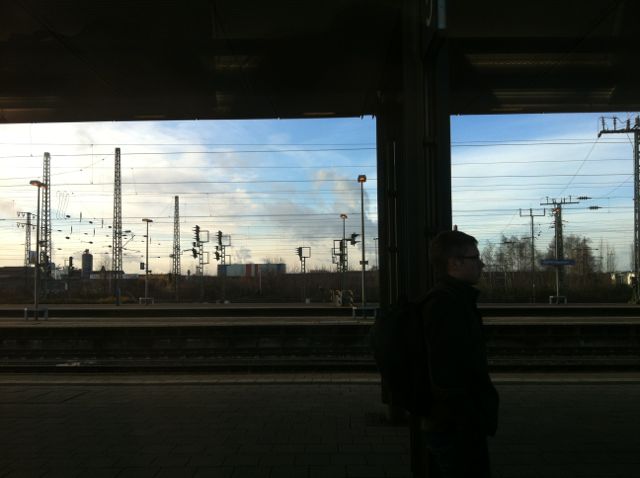
Germany from the train.
I continued working on Saturday, December 1. I had to, because I am planning to travel 500 km away from Berlin to the Cologne area from December 2 – 5 to visit friends and relatives, and I am not bringing any work along! I was finally done around 3:30 pm, so just as it was getting dark, I went for a walk to the nearby “Mauerpark”, a former East-West border area here in Berlin, where a section of the Berlin Wall still stands.
A weekly flea market livens up the somewhat dreary linear-shaped Mauerpark, and the debate about how to develop and use the park, has been lively as well. It appears that a compromise between recreational use and housing developments in the park has been made very recently. This may mean that nobody is very happy with the results, and the process may continue to drag out. As I discussed with the Vancouver artist, author and illustrator Robert Chaplin recently (I am a big fan of his work, by the way), you just get more done in a benevolent dictatorship because all that democratic consensus-building shit slows everything down.
I have inserted a slide show here, of a search for “Mauerpark” on Flickr — none of the photos above are mine, of course.
I had brought my good camera, so afterwards I continued my walk into the Berlin evening, taking photos of street scenes and later meeting my new artist friend Nina for a coffee and a gallery opening.

In the Mauerpark in Berlin.

A tiny birch forest in the Berlin Mauerpark is a welcome relief from the urban environment.

Concession stand under the U-Bahn on Schönhauser Allee, Berlin.
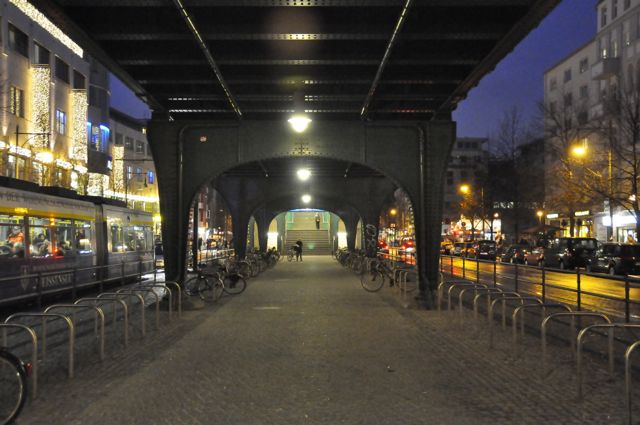
Under the U-Bahn on Schönhauser Allee, Berlin. The U-Bahn is elevated here, just like the “L” in Chicago, and the stations and supports have been painstakingly restored in recent years. The green-painted metal with its large rivets looks great — and it is functional. Is it just me who thinks this is one of the most interesting sights in the city?

Berlin street food bistro. There is no shortage of inexpensive street food in Berlin, and even now in the chill of winter, people are having a quick bite outside before getting back to errands or partying.
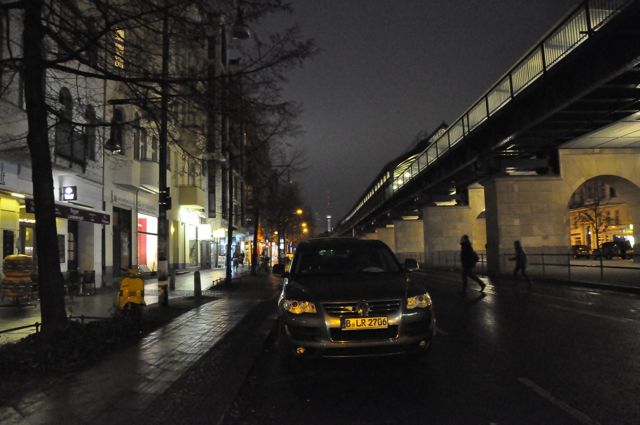
The elevated U-Bahn track along Schönhauser Allee, Berlin.

Signage at a hairdresser, Berlin.

Konopke’s Imbiß, Berlin. Another food kiosk under the U-Bahn track — this one is 80 years old, serves good sausages, and has survived a World War and being on the East Berlin side, a socialist regime.
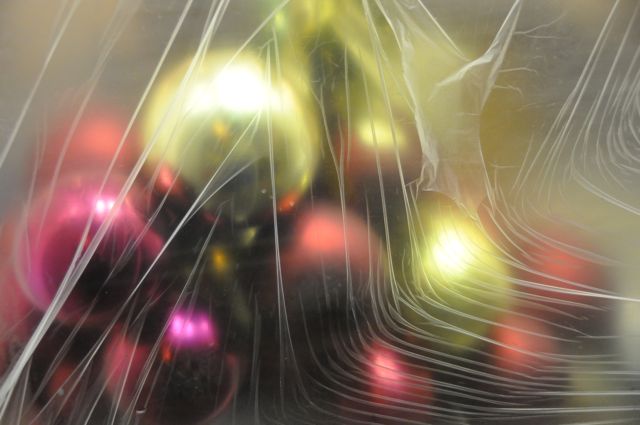
Christmas decor through a veil of plastic wrap, Berlin. Taken through a store window.

I am debating whether I should buy a small Christmas wreath for my place. But that might take valuable table top space away from my sketchbooks… Must consider priorities in life, always.

Lucia Christmas market, Berlin. Eventually I found myself back at the Christmas market in my neighbourhood and decided to grab a quick dinner before my evening with Nina.
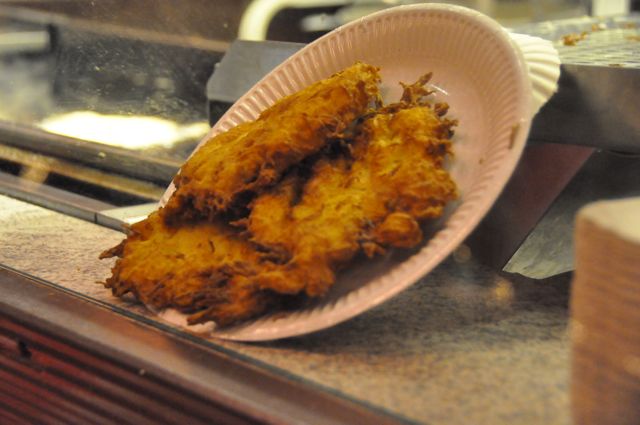
I had dinner at the Lucia Christmas market, Berlin. I ordered these potato cakes (Kartoffelpuffer) and they came with pickled salmon, pickled herring, caviar, and a sour cream sauce, for € 7.

Another € 3 bought me this ceramic boot of Glühwein (mulled wine) which was strong and tasty. They charge an additional € 1 as a deposit, in case you don’t bring the little boot back. I debated whether I should keep it, but decided that I have little use for ceramic cups in the shape of a Santa Claus boot, and that it was best to just take a photo.

Saturday night at the Eberswalder Strasse U-Bahn station. It was only 6:00 pm at this point, the night was young. Night clubs in Berlin don’t open until around midnight, and there is no closing time in Berlin, so partying can go on all night, and then you go out for a hangover breakfast.

After I met Nina, she showed me these cool shops under the U-Bahn in a different area of Berlin. The neon lighting in this bookstore (Bücherbogen, apparently a great store for art and design books, on Savignyplatz) nicely emphasises the domed ceilings that are found under the U-Bahn track.

Heading out on the town, Saturday night in Berlin. This woman has compiled much variety in her outfit, but the sparkly tights really hold it together.

At a gallery opening with Nina. The vernissage was held at a gallery called Kunstraum Fröauf and the show was titled “Fuffzehn” which is Berlin dialect for “Fünfzehn” which means “fifteen”, because it showcased 15 artists with an emphasis on a photographic approach to art or incorporating photographic elements. Nina introduced me to a couple of artists, everyone was very friendly and relaxed. I found out that one of the artists was the daughter of a wealthy collector of art nouveau, who has recently sold his complete museum, the Bröhan Museum, to a collector in China, where a brand new museum will be built for his collection in the city of Hangzhou. It is a strange new world. I will have to visit this museum before it moves to China.